Showing posts with label McKay. Show all posts
Showing posts with label McKay. Show all posts
Sunday, November 20, 2016
Thursday, October 20, 2016
Short Term vs. Long Term Investing
 |
| http://idkmen.com |
Investing varies from person to person. Some people want quick cash while others want a steady increase in profit. Both can help and both can hurt. Long term investing and short term investing are the most common options for investors. Depending on the amount of time he/she needs the money by, the choices for investments vary from slow growth over the course of several years, to quick profit that could be sold for a profit just a few days later. The choices are vast, and each have their own perks and risks.
To begin, we are going to skim over a term known as The Efficient Market Hypothesis. On one of the most credible economic websites on the internet; Investopedia, they define it by saying "it is impossible to "beat the market" because stock market efficiency causes existing share prices to always incorporate and reflect all relevant information." In simpler terms it pretty much means that no matter what a stock will trade for its fair value and because of this an investor cannot purchase undervalued stocks or sell a stock for an inflated price. Now that we have covered The Efficient Market Hypothesis we can move onto the topic at hand.
On a website known as EdwardJones.com, the author Edward Jones, is the founder of Edward Jones Investments which is an investment company based in Missouri. In his article Jones writes about the short term vs the long term when investing. We are going to be starting with short term. To begin Jones writes "When you purchase a short-term vehicle, you are generally not expecting much in the way of a return or an increase in value. Typically, you purchase short-term investments for the relatively greater degree of principal protection they are designed to provide." Short term investments obviously will not lead to as great of a return as a longer term investment because there just isn't enough time to accumulate a huge profit. So why do it? There is a greater sense of security to buy a stock only to sell it a few days or even hours later. The chance of losing a ton of money is low so the risk is low. However, there are exceptions. Stocks known as penny stocks are the riskiest and highest reward short term stocks. A penny stock is any stock that trades under $1. These types of stocks are an investing class favorite because one can double their investment in an extremely short period of time. We're talking seconds because an increase in a stock that's value is less than a dollar by .01 cents can give a huge return depending on the amount initially invested. As expected this risk can also lead to that same amount of money disappearing and the potential loss is immense.
Now, onto the more common stock invested in by an average citizen; The long term investment. This stock is very common for people saving for retirement because of a steady growth over a long period. Jones states "When you purchase an investment that you intend to keep for many years, you may be expecting the investment to increase in value so that you can eventually sell it for a profit. In addition, you may be looking for the investment to provide income." These stocks tend to be less risky in the sense that one probably won't lose their entire investment in a minute like what can happen with penny stocks. However, there is a chance that one can lose more because typically the longer term stocks have more money invested in them to make a greater profit.
So, which is better? This answer really depends on the investor and when the money is needed. If money is needed fairly soon a short term investment would be better or if the money is being invested until retirement, a long term investment would prove more beneficial.

Friday, October 7, 2016
How does the Stock Market affect the Economy?

Source: http://moneymorningnews.weebly.com
When a person thinks of the stock market the first thing that comes to mind is usually the Great Depression. Although it was not 100% responsible for the depression it did play a large role in it. The market controlling people causes fluctuations. There are 5 main ways in which it affects the economy, and 2 of them revolve around how the investor feels. Those factors plus the 3 others can determine how a market acts and how it impacts the economy.
A common myth about the market is whenever the market is doing well so is the economy and vice versa. That may be true most of the time but the stock market is not the only thing that determines whether the economy is doing good or bad. Tejvon Pettinger, an Oxford graduate and current Economics teacher at Greenes College, wrote a blog on Economics Help on the topic of how the market affects the economy. In his opening paragraph Pettinger states "daily movements in the stock market can also have less impact on the economy than we might imagine. During the great recession of 2009-13, the stock market performed quite strongly." This piece of evidence puts a big hole in most people's viewpoints of the market. There is a saying about the market: "Stock markets have predicted 10 out of the last 3 recessions." I know that saying probably doesn't make sense but look at this example. For starters there was actually a huge one day crash on October 19th 1987 a day known as Black Monday. On this day the Dow lost $500 billion (over 22% of its value) and I bet you've never even heard about this. Do you know why? Because it didn't cause any lasting damage. In fact, it ironically helped us because the U.K cut interest rates in fear of a recession and the low rates caused a boom. As far as actual impacts, Pettinger explains five ways in which the stock market affects the economy:
- Number 1 is known as Wealth effect. What wealth effect explains is that when people lose money on the market, they will become more hesitant to spend money which can contribute to a decrease in consumer spending. However Pettinger states "the effect should not be given too much importance. Often people who buy shares are prepared to lose money." Even though people are prepared to lose money they can still become hesitant to spend money after they lose some.
- The second way is the effect on pensions. Since pension funds invest quite a bit of their funds in the stock market so, if there is a large decrease in share prices then the pension funds lose value.
- The third is actually confidence. Yes, confidence. If people are afraid a recession might happen then stock prices could actually fall. It also works vice versa. In the middle of a recession share prices could increase because investors look forward to a recovery.
- The fourth way is investment. Expanding firms often issue more shares as a cost effective way of borrowing money. However, this process because harder as share prices decline.
- The final way is the Bond Market. There are other markets other than stocks and bonds is one of them. When share prices in the stock market look unappealing more people may choose to invest in bonds. These investments are less risky and offer better returns during times of uncertainty. The market impacts the economy in very different ways. it also impacts people in many different ways. But, the market can't be beat or can it?
Friday, September 30, 2016
How bad can the market get?
 |
| Source: http://xpartan.es
The market has the potential to make a man rich but, it also has the potential to bring the economy to its knees. How does this happen and what are the impacts?
We can never be 100% sure on when this happens but we can however see warning signs and prepare for the worst. We ignored a reticent Fed and when the Depression hit, and terrified president Hoover only made it worse. It wouldn't be until the end of World War II, 17 years later, that we finally got back on our feet. A great article to learn about The Great Depression can be found on Investopedia. No author directly claims credit for this source however, this website is the most reliable economic website there is.
To start, we need to know exactly what it was and what happened during this period of time. In this article Investopedia explains that "The Great Depression was the greatest and longest economic recession of the 20th century and, by some accounts, modern world history." Investopedia also says that "Contemporary accounts of the Great Depression date its beginning to the U.S. stock market crash of 1929." The Depression was caused by the crash of the stock market on October 24th 1929, a day known as Black Thursday. On this specific date stocks plummeted and banks failed which caused everyone to lose everything and caused the economy of the United States to have its worst crash in history. The impacts of this lasted until the end of World War II, some 17 years later. During this time unemployment was incredibly high. In 1929 (pre-crash) the unemployment rate was 3.2%, by 1933 it was 24.9%. Even after government spending and two presidents trying to reduce it by 1938 it was still at 18.9%. Without jobs the economy couldn't recover. But why did it last so long?
There are several potential factors that contributed to The Great Depression's 17 year lifespan. According to Investopedia some of these factors are "Many of President Hoover's interventions damaged the economy's ability to adjust and reallocate resources. The Smoot-Hawley Tariff Act of 1930 triggered a 66% decline in global trade between by 1934. Hoover encouraged businesses to raise wages and keep prices high at a time when they should have fallen, and effectively banned further immigration to the United States in 1930." Hoover was not the right man for the presidency during this time of need. The decline of global trade prevented the economy from getting out of the Depression and, paired with high prices and wages causing less people to be employed and less buying power to the consumer created four dark years in the United States. The final question that needs to be answered is how could this have happened after the Roaring 20's?
The answer once again lies in Investopedia in an article titled What caused the Great Depression? In this article written by Andrew Beattie who has spent most of his life writing, the causes of the Depression are explained in depth. Beattie explains "The Great Depression was the result of an unlucky combination of factors - a reticent Fed, protectionist tariffs and a Keynesian, government-centered recovery plan." This quote sounds a bit complicated but what it's basically saying is the Federal Reserve cut the money supply by almost 1/3 when the market crashed which caused all recovery hope to be lost. On top of that the reserve refused to bail out banks. So, by increasing the supply of money during the 20's the reserve created the bubble that caused the depression and refused to help when the depression hit. Also, President Hoover's tariffs only made things worse. The tariffs pretty much cut off international trade altogether. Eventually, through World War II the U.S was able to get out of the depression but the damage was done.
This leads to a final thought, how exactly does the stock market impact the economy?
|
Wednesday, September 21, 2016
Can the Stock Market be predicted?
 |
| Source: http://faganasset.com
The stock market has the power to make a man millions in a minute or the potential to plummet a country into depression. When one thinks of the stock market they typically think of an opportunity to make cash but, how exactly can we predict which stocks to buy and which to short?
Although it's not possible to predict the future there are some methods that can be used in order to make the best guess. Through these four methods written by Tristan Yates, an investor will have the best chance of getting high returns on his or her investments. One great way to find out is an article on a well known and reliable stock market website known as Investopedia. The article was written by Tristan Yates and is titled 4 ways the market can be predicted.
In this article Yates explains "There are two prices that are critical for any investor to know: the current price of the investment he or she owns, or plans to own, and its future selling price." Let's start here. Obviously the current price of a stock is the basis of any investment. An investor doesn't want to overpay for a stock that they don't know very much about. This leads to the second part. Yates also explains that it's very important to know the future price of a stock. I know what you're thinking: How am i supposed to know the future price of a stock? To answer that we need to look into the past and ask a single question. What does the history of this stock look like? Yates cites a 1993 study by Narasimhan Jagadeesh and Sheridan Titman and explains that "they found that stocks that have performed well during the past few months, are more likely to continue their out performance next month. The inverse also applies; stocks that have performed poorly, are more likely to continue their poor performance." To put this into more simple terms; if the stock shows a steady growth rate then, now may be a good time to buy however, if a stock shows a declining growth now may not be a good time to buy. Or is it?
This isn't normally how people make millions on the market. There is a different more risky way that Yates cites in his article known as value investing. Yates writes "In 1965, Paul Samuelson studied market returns and found that past pricing trends had no effect on future prices and reasoned that in an efficient market, there should be no such effect. His conclusion was that market prices are martingales." In a way both are right. The study in 1993 concluded that the most reliable stocks to buy are the ones which have a steady increase in price during the past few months which is very valid. However, the saying "high risk high reward" applies very much so in the study in 1965. What we still have to discuss is the process known as value investing which although is incredibly risky, is the way people make millions. In value investing investors look for a stock that is "underpriced" maybe a pharmaceutical company's earnings announcement says that they had a high quarterly earning. This is a green light for investing in that company. Since typical pharmaceuticals are very cheap a price change by as much as a quarter can make thousands of dollars. This of course comes with the risk that if a company had poor earnings and one was to invest in it they would loose a large sum of their investment. But, after decades of the brightest minds trying to answer this question they've found that exactly predicting the market is not possible. One can only predict what is going to happen based on facts they already have. This raises a question: Historically, how bad has the stock market performed? How did this affect the overall economy? |
Friday, September 9, 2016
Stock Market
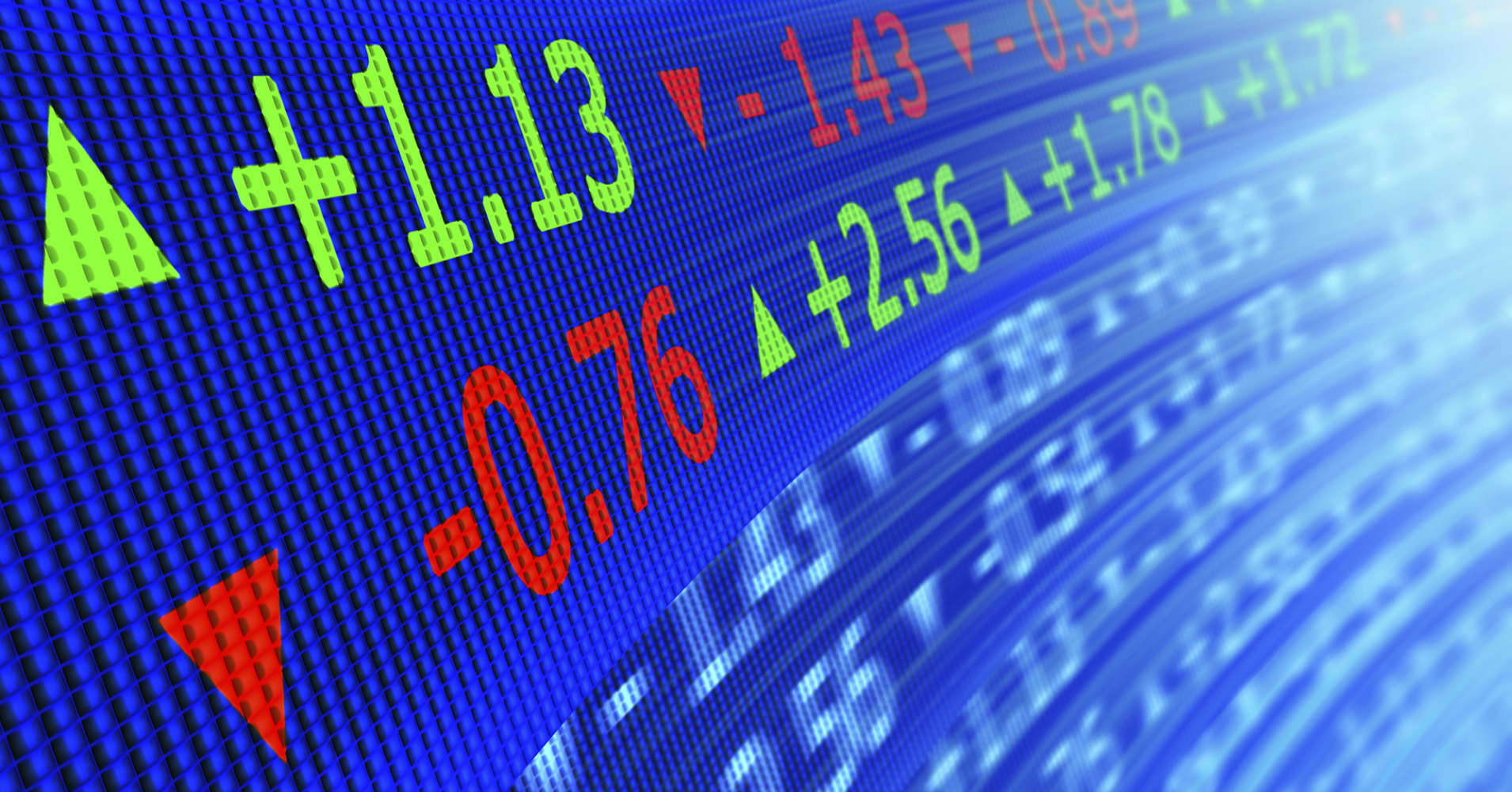 |
| Source: http://fm.cnbc.com KEY ECONOMIC PRINCIPLE I’M ADDRESSING: People (usually) respond to incentives in predictable ways. OVERALL RESEARCH QUESTION THAT CONNECTS MY TOPIC TO THE ECONOMIC PRINCIPLE: What impacts does the stock market have? (on its investors and the world)
What incentives does the stock market create and how do they affect the economy?
|
- 3-4 SUB QUESTIONS/TOPICS THAT HELP ADDRESS THE OVERALL RESEARCH QUESTION and EMBEDDED LINKS TO RELIABLE SOURCES THAT HELP ANSWER THE QUESTION
- Can the stock market be predicted?
- How bad can the market be?
- How does the stock market affect the economy?
- Short Term vs. Long Term Investing
- Efficient Market Hypothesis
- What's The Difference?
- Short Term and Long Term
Subscribe to:
Posts (Atom)